
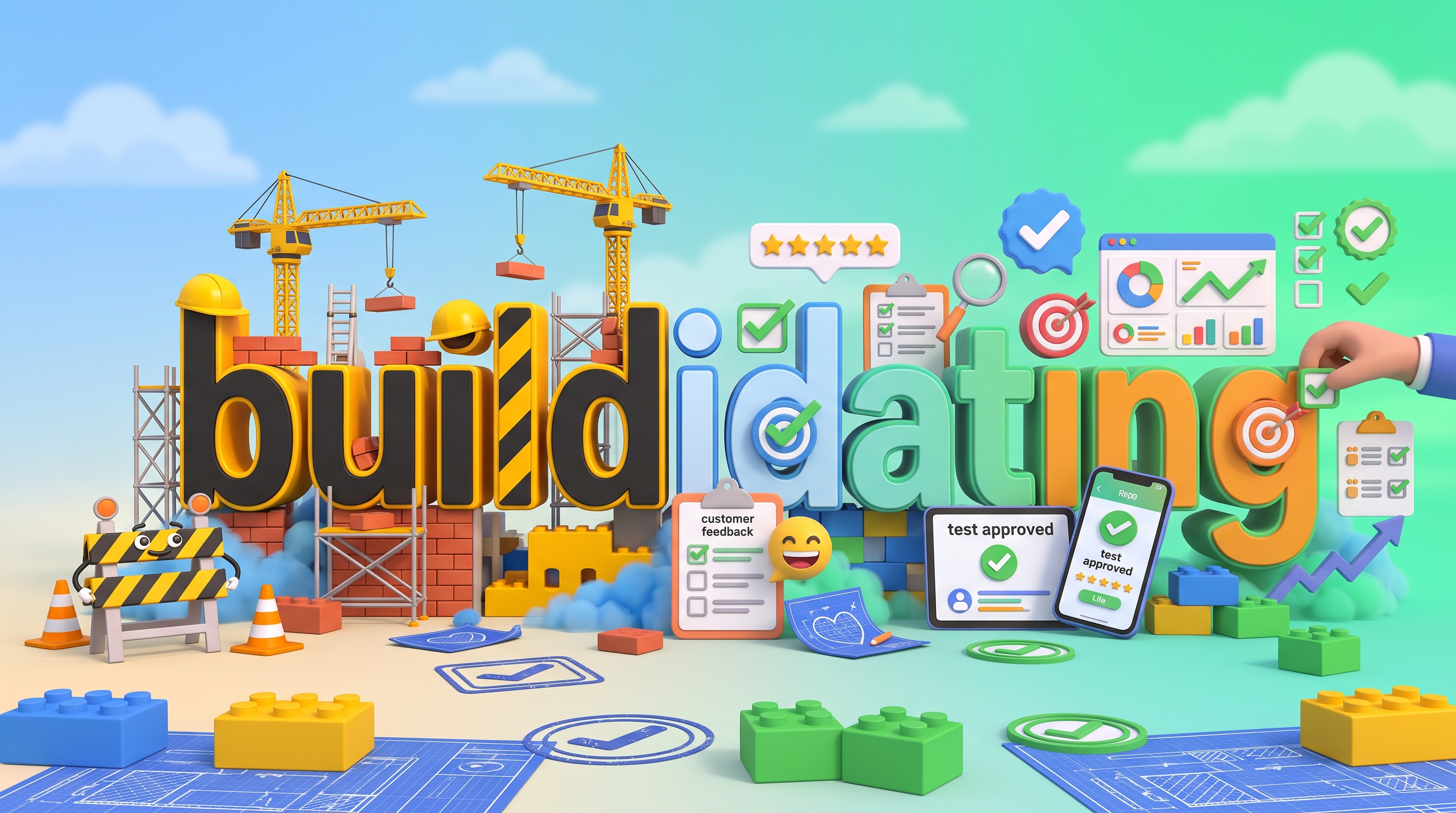
Building and validating at the same time
I've been coding with agentic support for a bit more than a year now on the side, and built a huge number of things, all developed with a raspberry pi 5 running in my living room as dev server.
Not all of these have been finished or released, but there are definitely some threads for me: Talk with Ren made me interested into richer personas, not just "helpful agents", leading to Bjorn the Bouncer, the idea for a persona rich agent roleplaying as a used camera shop owner. Another thread was creating tools to keep the loop fast: dev-router, a home use OAuth server, a tool to manage credentials for LLM endpoints. And yet another topic was agent-human collaboration, leading to explorations into multi-agent collaboration, and knowledge bases (I'll talk about that another time).
One thing I definitely fell for initially was "AI excitement". Especially a year ago, agents were very enthusiastic as long as if you were, and I just love developing ideas, so more than once I came out of a longer session in a haze of "OMG, this is IT! If this takes off, it's going to be amaaaazing!" But then, I launched Talk with Ren, 60 people signed up, most of which I knew personally, and then nobody used it more than 3 sessions. At first I thought "is this that sycophancy problem I keep reading about?" I tried tweaking the prompt, making the AI more challenging, etc. But over time I realized that the agent was not the problem. You can have exactly the same kind of echo chamber with a human. Be it a cofounder, who also just wants to see it happen, or a supportive friend. That's what the book "The Mom test" is all about. But then I wondered, is it a problem? Isn't it more like ideation is just one phase of many, and you still need to validate your ideas by asking yourself "what do we know, what did we just assume?"
So I thought "what's next? Focus groups? A/B tests?" or, maybe I should look for feedback readily available: myself. I came up with two rules:
-
Try to solve a problem that I have.
-
Do I come back to using it?
The first rule was important to ground myself again after flying in the sky with thoughts like "this could become a multi million dollar platform play". When I focussed on a concrete problem I'd often realize that I didn't need any of those platform features I had already envisioned. More than once did this help me to actually build the simple thing instead.
The second rule I originally didn't see, but over time I noticed that there were some things that I built that felt useful, but then I never used them again. Other tools immediately became part of my toolbox.
But then I realized (and thanks for sticking with me till here): what am I actually doing? I'm building tools mostly for myself, and I'm immediately using them. Because of agents, the building was minutes for what used to be hours or days. And since I'm the user, testing is immediate.
So I was building and validating at the same time... building and validating... buildidating?!
It always used to be that building and validating were two different stages. You used to get seed funding to get something in front of customers to get some data point whether it actually made sense. But now, you can build so quickly it doesn't even have to be a separate stage anymore. And if you can rapidly get feedback, the two stages can really collapse, and you're getting iteration speeds that don't match anything we're used to in the software industry.
Not always of course, but now I'm thinking what does it take to be buildidating more? And the real challenge: how to bring this way of working to the team level.
Conversations